
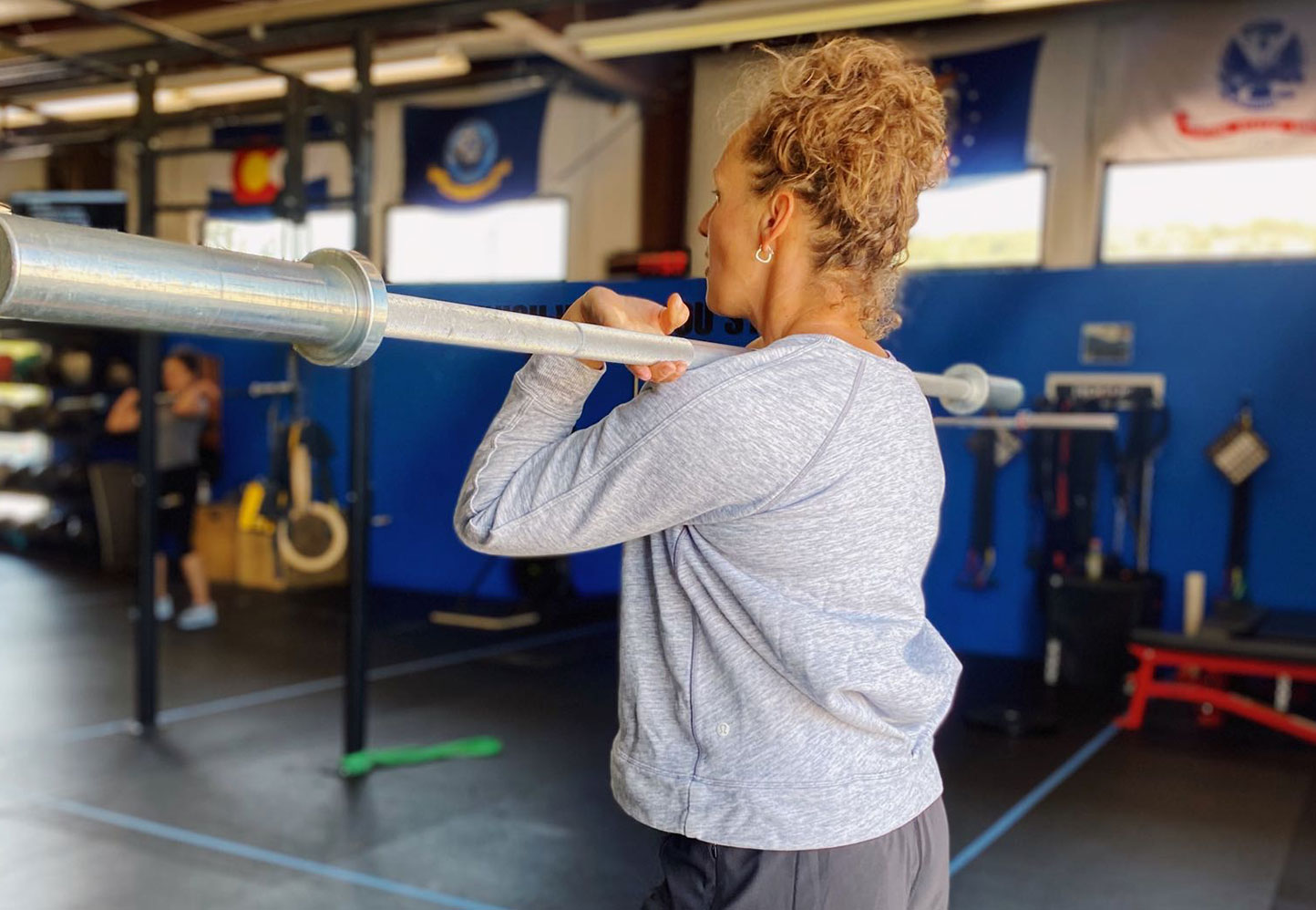
Over the last few weeks, our gym has experienced two very different, but equally meaningful, competitions.
First, we had the privilege of cheering on our very own Ken Phillips at the CrossFit Games. Watching one of our own compete on the biggest stage in our sport was something our community won’t soon forget.
Then this past weekend, many of our members stepped onto a competition floor for the very first time at a local partner competition. For some, it was their first experience hearing “3…2…1…GO!” For others, it was another opportunity to test themselves alongside friends.
Those two events reminded me why I coach the way I do.
Every year we compete at this local event, we don’t always walk away with the most podium finishes. There are teams that move faster than us. There are athletes who are willing to sacrifice movement quality to squeeze out a few more reps.
But every single year, I walk away incredibly proud.
Because our athletes move well.
They squat to depth.
They finish their lifts.
They lock out overhead.
They respect the standards whether a judge is watching or not.
And to me, that matters.
As coaches, we have a choice every day. We can chase faster times and bigger numbers at all costs, or we can build athletes from the ground up—teaching them to move well first, then move faster later.
I’ve always believed in the second approach.
If you’ve been in one of my classes, you’ve probably heard me say, “Slow down.”
Not because I want less from you.
Because I want more for you.
I want movement that lasts for decades.
I want joints that stay healthy.
I want strength that’s built on a solid foundation.
I want you to ski longer, hike farther, pick up your grandkids, and still be moving well years from now.
One moment from this weekend’s competition will stick with me for a long time.
One event was a one-rep-max complex:
1 Power Clean + 1 Hang Clean + 1 Jerk.
There were four teams on the competition floor.
Three of them were ours.
One after another, our athletes stepped up to heavy barbells and put on a clinic.
They weren’t muscling the bar.
They weren’t catching lifts in questionable positions.
They weren’t surviving the movement.
They were moving beautifully.
Power cleans that looked effortless.
Hang cleans with patience and precision.
Jerks stacked overhead with confidence.
The weights were big.
The movement was better.
As I stood there watching, I realized I wasn’t just watching a lift.
I was watching years of coaching.
Years of drilling footwork.
Years of reminding athletes to finish the pull before rushing under the bar.
Years of encouraging people to take weight off the bar until the movement was right.
Years of asking for one more inch of squat depth.
Years of saying, “Let’s make this rep look even better.”
In that moment, I wasn’t thinking about who would win the event.
I was thinking, This is exactly what we’ve been trying to build.
And it may have been one of the proudest coaching moments I’ve ever experienced.
It also reminded me why I’m willing to hold the standard, even when it’s harder.
Because beautiful movement doesn’t happen by accident.
It happens through consistency, patience, and thousands of quality repetitions.
That’s why I slow people down.
That’s why we ask for full range of motion.
That’s why we scale workouts.
That’s why we care how you move, not just how fast you finish.
Over the next few weeks, I want to share more about the “why” behind what we do at our gym.
We’ll talk about movement standards, keeping score, relative intensity, scaling, and what makes CrossFit different from almost every other fitness program out there.
Because once you understand the “why,” the coaching cues, the whiteboard, and even the workouts themselves start to make a whole lot more sense.
This is Why We Do Things.
Why We Do Things: Range of Motion
If you’ve been with us for a while, you’ve probably heard us say:
“Full range of motion.”
“Get below parallel.”
“Finish your extension.”
“Lock it out.”
“Touch your chest.”
We say these things A LOT.
And there’s a reason.
We don’t train through a full range of motion just to make the workout harder.
We do it because we want to own that range of motion in our lives.
Think about what happens outside the gym.
You fall down on the ski hill. Can you get back up?
You sit down on that ridiculously deep, squishy couch. Can you get yourself back out?
You squat down to pick something up. Can you stand back up without using your hands?
You step over something on the trail. Can you lift your leg high enough?
You reach into the back of the car. Can your shoulder move where you need it to?
You get down on the floor to play with your kids or grandkids. Can you get back up?
That’s fitness.
We want you to have strength and control throughout the range of motion that life asks of you.
And that’s why we care about the little things in the gym.
When we ask you to squat to the appropriate depth, we’re not just checking a box on a movement standard.
We’re teaching your body to be strong there.
When we ask you to fully extend your hips, we’re teaching you to own that position.
When we ask you to lock out overhead, we’re developing strength and control at the end of that range.
But full range of motion doesn’t mean everyone’s range of motion looks exactly the same.
Injuries, mobility limitations, experience, age, strength, and a whole host of other things affect how someone moves.
That’s where coaching comes in.
Our job isn’t to make every person in the room move exactly the same.
Our job is to help you find the best movement you can do today, and then help you gradually improve from there.
A little change you’re going to see
Starting this week, you may notice a small dot next to your name on the whiteboard if you’re consistently missing the intended range of motion during a workout.
Don’t panic. 😂
This isn’t a grade.
It isn’t a punishment.
And it certainly isn’t meant to take away from your workout.
It’s simply a way for us to bring awareness to something that may be difficult to notice when you’re breathing hard and trying to get through 100 wall balls.
We’ll still coach you throughout class. We’ll still give you cues. We’ll still help you make adjustments.
The notation is simply another tool for us—and for you—to recognize:
“Hey, this is something I should pay attention to.”
Because at the end of the day, we want you here.
We want you moving.
We want you getting stronger.
We want you enjoying your workout and everything outside the gym.
AND we want to encourage you to do the best you can do.
Sometimes your best means full range of motion with the prescribed movement.
Sometimes your best means scaling the movement.
Sometimes your best means reducing the weight.
And sometimes your best means simply showing up.
There is no shame in any of those things.
But if you’re capable of doing the movement correctly, we want you to own it.
Because someday, getting yourself up off the floor might not be a CrossFit workout.
It might be life.
And we want you to be ready.
Technique first. Speed second.
That’s how we build strong, capable humans—not just for today’s workout, but for the next 10, 20, and 30 years.
That’s why we do things the way we do.
Why We Do Things: More Than a Workout
People often ask us,
“What makes CrossFit different?”
The answer isn’t barbells.
It isn’t burpees.
It isn’t the whiteboard.
It’s the methodology.
We focus on functional movements performed at an appropriate intensity, with measurable results.
But there’s something even more important.
Community.
Every class has coaches who know your name.
People who notice when you’re missing.
Friends who celebrate your first pull-up just as loudly as someone else’s personal record.
We cheer for the last person to finish.
We scale workouts so everyone belongs.
We measure progress instead of perfection.
And we believe fitness should make you better at living life outside the gym.
That’s what makes CrossFit different.
It’s not just an hour of exercise.
It’s a lifelong pursuit of becoming stronger, healthier, and more capable together.
https://www.crossfit.com/essentials/what-is-crossfit-part-2-definition?utm_source=chatgpt.com

